

(+91) 97260 97222
We are open 9 AM - 6 PM
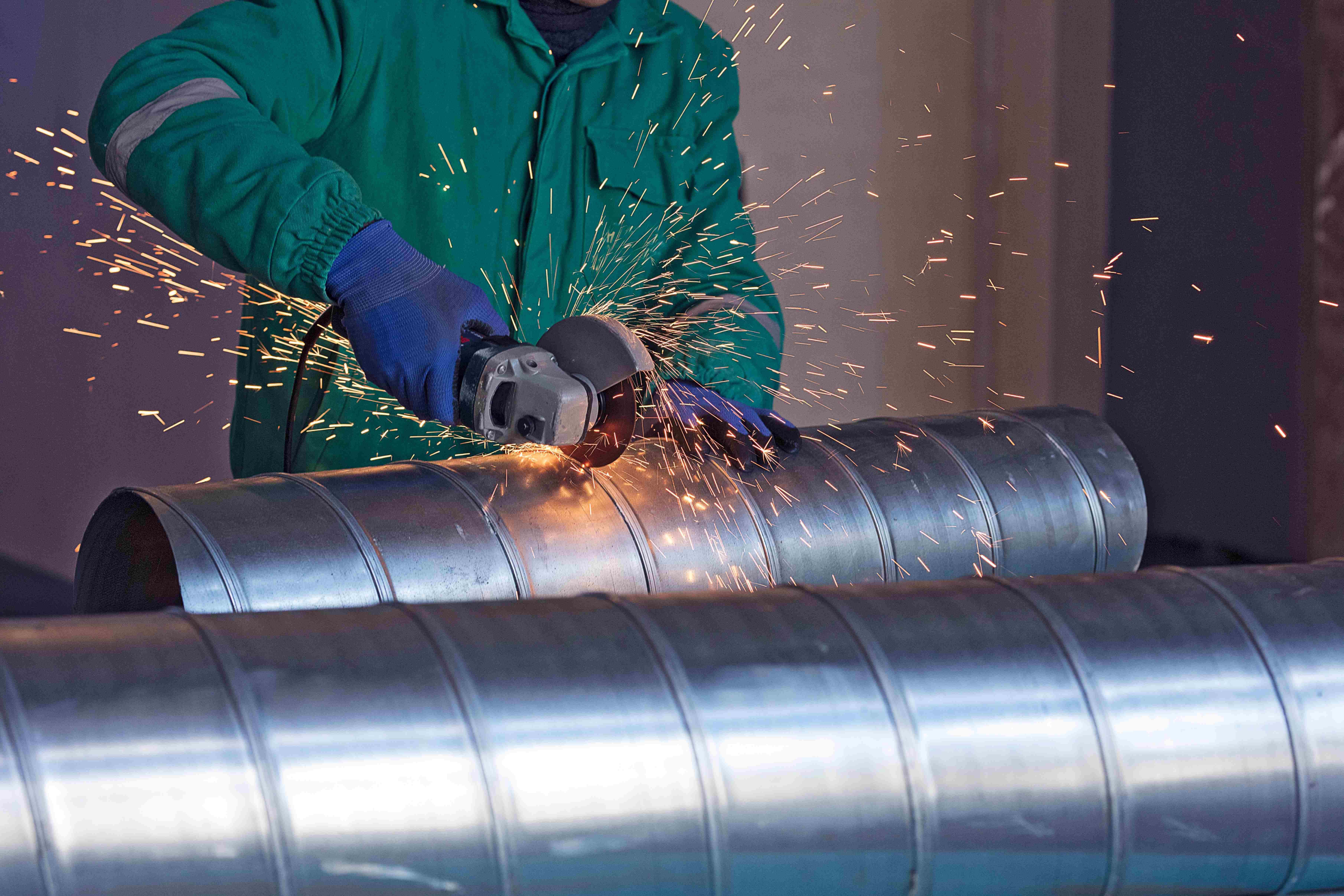
Fabrication & Erection of AG (Above Ground) Unit Piping Work
Fabrication refers to the cutting, shaping, and assembling of pipes in a controlled environment, usually a workshop.
Erection involves the installation and alignment of prefabricated pipe sections at the actual site location.
AG Unit Piping stands for Above Ground piping systems used to carry liquids or gases across industrial units without underground laying.
All work is done according to P&ID (Piping and Instrumentation Diagrams) and isometric drawings approved by the engineering team.
Materials typically include Carbon Steel (CS), Stainless Steel (SS), and Alloy Steel depending on the fluid type and temperature.
Pipe spools are fabricated by cutting, beveling, and welding of elbows, tees, reducers, and flanges to the required specification.
A fit-up inspection is conducted before welding to ensure correct alignment and gap tolerance.
Welds are done as per Welding Procedure Specification (WPS) using qualified welders under strict supervision.
NDT (Non-Destructive Testing) such as radiography or dye penetrant tests is done to ensure weld quality.
After fabrication, spools are hydrotested (or pneumatically tested) to verify pressure integrity.
Fabricated spools are transported to the site with care using rigging tools and lifting equipment.
Site erection includes lifting, placing, and aligning the spools using cranes, chain pulleys, and jacks.
Pipe supports, hangers, and guides are installed to accommodate thermal expansion and load-bearing.
Final welds and connections are made on-site with high precision and safety compliance.
The pipeline is then flushed and cleaned using air, water, or chemical flushing as per the service type.
After installation, another hydrotest is performed to ensure there are no leaks under pressure.
All erection and welding activities are logged in inspection reports, test certificates, and handover documents.
Throughout the process, safety protocols like PPE, scaffolding, and permits are strictly enforced.
Coordination with civil, electrical, and instrumentation teams is crucial to avoid clashes.
The final system is commissioned, ensuring it is ready for operational use with proper documentation and client approval.

M/s Shreya Enterprises was founded by Mr. Rajeev Kumar Tiwari during the year 2016. The company has grown by its strength, mainly manpower and its rich experience. We are successful in earning and maintaining good will in all our areas of operation on account of our sincerity in dealings, quality consciousness of our men and our enthusiasm to deliver goods & services in time.
 335, 3rd Floor, Shilpi Square, Opp. Nagori Dairy Bypass Road Bharuch, Dist. Bharuch, Gujarat 392001(India)

